Friday, January 9, 2015

The Night Watch

Sarah Waters is one of those authors who make tough things look very easy.  I have read all of her works now, except for her very newest novel, and she has pulled off wonderful tricks and effects in each book.


The Night Watch is possibly my favorite of her books.  I think this is likely due to the structure, which starts in 1947 and then follows the end backward through to its start in 1941.  I am thinking the same story, told chronologically, would not have had the same effect, would not have been as poignant.  Which is a little mind-bending in and of itself.

The title is referring to the third shift ambulance work that the main characters engage in during the bombings of London in WWII.  When Waters takes us out with Kay and Micky, the mood and feel is just amazing.  The same for the times we spend with Duncan in prison during the bombing raids.  Supremely eerie.

But the real gem, the passage that just takes the cake, is the 1941 section that gives us Alec.  An action that drives so much of the novel.  Most authors wouldn't have taken us as far along the path as Waters did.  The action would have happened off-stage, probably because another author wouldn't have been able to handle it as well.  This part reminds me so much of Robert Frobisher's character in Cloud Atlas.

I also thought it was a brilliant move to make some typically male faults a part of Kay's character.  

Final call:
If you are going to jump into Waters, I'd probably choose this book first.  It's got all of the Waters hallmarks without too much grinding miserableness.  And I'm still, apparently, a sucker for a non-linear plot.


The Assassination of Margaret Thatcher

Hilary Mantel is one of my favorite people, based on the first two books in her Cromwell trilogy.  So, when I saw her newest book of short stories on the shelf at the library, I thought, "Why not?"


Only the title story had much of the style that is so captivating in the Cromwell books (Wolf Hall  and Bring Up the Bodies).  That last story is top notch, and quite daring in its way.  The Long QT is another of the stories that stands out from the others.  

The other stories, well, most of them I was pretty "Meh." about.  Interesting, but not knock outs.  

Final call:

Borrow the book from the library, read the last story, and "The Long QT."  Then go read her Cromwell books.


Elizabeth Costello & Brooklyn

In the interest of catching up on reviewing books, here's a two pack.  These have nothing in common, really, except I read them back to back.

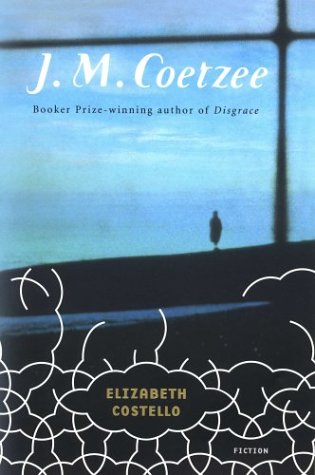
First, Elizabeth Costello by J.M. Coetzee.  This is not structured like a novel, more like a set of essays framed as a series of talks given by an aging author in various places around the world.  Then, she dies and is required to put her beliefs in action in the afterlife, such as they are and such as it is.


I did some research into the book, to help me make sense of it.  I'll be the first to admit, what Coetzee's getting at, what he's approaching, is pretty sophisticated philosophy and it's is over my head.  Didn't mean that I didn't appreciate the book, but I'm sure I didn't take as much away from it as is there.  There are also some deeply unsettling topics covered here.

Next, I read Brooklyn by Colm Toibin.  I'm getting introduced to some fine Irish writers this year.  Toibin has an extraordinarily straightforward and uncomplicated writing style, at least in this book.


Eilis is the main character of Brooklyn.  The plot has a very even keel.  Eilis faces trials and travails, no doubt, but usually makes the right decision (or is pushed toward the right decision, but that's another issue) and moves forward.  No one takes advantage of her, despite the tremendous opportunities.  She meets a man and falls in love and he has no major faults.

The end disappointed me, though.  Eilis is already quite the passive character.  (She frickin' emigrates to America because her sister and mother decide that someone has to go, and it should be Eilis.)  She secretly marries her boyfriend in Brooklyn, at his insistence, before returning to Ireland for her sister's funeral.  While there, she develops a serious relationship with an old acquaintance and appears to come out of her dream only when one of the local gossips hears from Eilis's Brooklyn landlord.

It would have been much better, to me, if Eilis had decided to return to America on her own, without being tattled on.

Final call:

For both books.  Elizabeth Costello probably deserves a half a star extra, and Brooklyn a half a star less, but what's one to do with only whole-star graphics :)


Cat's Eye

I chipped away at this book for a long time.  It's one that got interrupted by my studying.  And it is fairly melancholy, at a time when I was, too, so sometimes it was hard to pick it back up.


This is the third of Margaret Atwood's books I have read.  Cat's Eye has a lot more in common with The Blind Assassin than The Handmaid's Tale.  Excellent characterizations of women, very nuanced relationships.  Such an accurate depiction of girlhood, and one woman's interior life as she grows.

Atwood is just delicious to read.  This is not a happy book, but it doesn't matter.  Elaine, the protagonist, has been damaged by her life but has come to terms with her childhood through art.  She's most haunted by the lost chance at genuine friendship with her childhood best friend.

I felt kinship with Elaine's early years, where she was left to be herself, as she defined it, and lived an unorthodox life chasing insect infestations of forests with her scientist father.  Not that I did that, but the part about the lack of forced gender roles.

Final call:


Read this.  Read all her books.  Authors don't come this consistently good very often.


Sunday, December 28, 2014

Love and Drowning

Sometimes I like to trawl through Buzzfeed Books.  Their content is hit or miss, but I like the articles they pull together with 20 books for cranky people, or 5 books to read before the movie comes out, or any combination of various numbers of books that meet various off-the-wall conditions.

Anyway, what I'm trying to say is that Buzzfeed recently had an article called "20 Under 40 Debut Writers You Need to Be Reading."  I added quite a few to my "books to look for" shelf in Goodreads.  Then, as I was in the local library for an unrelated reason, I saw one sitting there on the new arrivals shelf, just waiting to be checked out.


This book is set in the U.S. Virgin Islands, both before and after the islands become a U.S. territory.  I have had a bit of an interest in Caribbean literature after visiting the DR and reading The Brief and Wondrous Life of Oscar Wao, so this book fit right into that groove and pulled me out of making a final push toward finishing my 2014 Challenge books.

This is mostly the story of two sisters, but it's also about how Virgin Island society changes as tourists, cars, TVs, and American-style racism show up on the islands.

There's a strong mystical bent to the story.  People move between myth and supernatural activities and normal day-to-day life without much comment.  Annette, the main character, has a wonderful, strong, unique voice.  She and her sister Eeona are elemental.  They take action based on urges, compulsions, and fate, despite rational thought warning them away.  Annette speaks and thinks in a strange English, she makes the words bend to her.

I am not whole-heartedly endorsing Land because I am not sure I understand a major facet of the book, the thematic element that blends together and confuses familial and romantic love.  

Final Call:


That being said, I do recommend this book, strongly.  The author does a wonderful job of capturing the relationship between people and their homelands.  At catching racial nuances.  She weaves a spell and its worth getting caught up in it.  At the end, I actually missed being in a place I have never physically been!


Tuesday, December 2, 2014

Fevre Dream

This is George R.R. Martin, of Game of Thrones fame, but well before he became a household name.  And let me tell you, this book is like a really really quick version of Game of Thrones.


First, the basics of the story are really engaging.  The setting is a knock out.  You meet a lot of interesting characters, and a lot of intriguing action occurs.  And then.  And then.

The plot doesn't go well for the good guys.  They disperse.  They take FOREVER getting their acts together.  When they do get their ducks in a row, their victories are anticlimactic.  Sound familiar?

Actually, it probably doesn't, because Game of Thrones still is not this far along in its development.  After TWENTY YEARS of real life writing time.

At least this is all one volume.  

Final call:


Imagine Mark Twain's Mississippi River, only with vampires.  And Martin is really honing his knack for making you feel uncomfortable in this story.  If you like babies at all, you really should skip a few chapters in the middle altogether.

But in the end, Abner is a great character, Martin has an incredible gift for dialogue, and this is still way better than most. 


Don't Tempt Me

I am still on the fluff train.  Loretta Chase writes romance.  Better romance than a lot of folks, but still romance.  Don't Tempt Me is more or less ridiculous, given its basic plot premise, but the entertainment level is still decent.


This book is basically cotton candy, all fun and no substance.  Don't let that stop you, but don't let it rot your brain, either  :)

Final call:


This may be cheesy romance, but at least its pretty good cheesy romance!