Showing posts with label 2015 Challenge. Show all posts

Friday, October 30, 2015

Illywhacker

This is a Booker Prize finalist from the 1980s, and I am left to wonder if maybe it doesn't age very well.  I think it's supposed to be a grand statement about the spirit and character of Australia, with comedy and tragedy and everything in between and everything a little fantastical, too.  

The general theme, i.e., lies and their value and what they say about the people who tell them and listen to them, is very intriguing.  Unfortunately, a lot of the book doesn't really address it.  You read on and on about improbable people doing improbable things in improbable ways, and then before you know it everyone's living in cages in a pet store.  No, really.  Maybe every 20 pages or so, you get a quick little flash of really insightful or beautiful text that you can't tie to the rest of it.  The balance is off, for me.  Or maybe it's just that I am not familiar enough with Australia to get all of the in jokes.

This is the only Peter Carey book I have read to date, but I get the impression that several of his other titles might have been a better place to start.  I also cannot tell you how much I dislike the cover.

Final call:

This book actually might be right up a lot of people's alleys, especially if those alleys are very literary and enjoy world fiction particularly, so don't write it off on my account.     

Thursday, October 29, 2015

The Diamond Age

I .... just don't know about this one.  The premise sounds beyond promising:  a young girl (ok, street urchin) in the future gets her hands on a smartbook programmed to essentially raise said child to be subversive, and before you know it, the entire world's in trouble.  

But the execution is a bit off.  Instead of getting tighter, the story spins off into weird subplots.  Poor Hackworth, always hapless, and disappearing from his family for ten years.  Sort of.  Miranda's in the story, then she's out of it sort of, then she's suddenly the key to it all.  And here's a sentence I never thought I'd have reason to type: the sexually transmitted data plot line was a huge turn off in a book about raising young girls.  It just didn't fit the mood or style and reaaalllllly slowed down the story. 

Sometimes books go astray by going for a big picture at the end, and giving no closure for the characters we've loved the entire book.  The Diamond Age is the exact opposite.  Just a few pages from the end of this looooooonng saga, we're still hearing incredibly specific details about how characters are fighting in the street.  Then, the book ends.  It's so bogged down in the minutia that I have no idea how the large scale competition between the Feed and the Seed is actually going to shake down.  Worse, I have no idea whether Hackworth is helping the Seed or not, or whether it's even a good thing.  

Gah!

Final call:

I can't give a book with this much humor and imagination less than four stars, but it probably deserves three. 


Wednesday, October 28, 2015

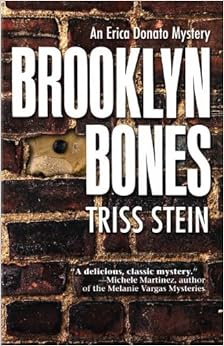
Brooklyn Bones

I don't think I've read a book by someone I've known, however meager the acquaintance, excepting academic books.  But here's one. I have to say, I expect the worst from genre mystery books these days, and Brooklyn Bones is solid.  It avoids a lot of traps.

Erica is our main character, and she has her head on strait.  The relationship between Erica and her daughter is really sweet, even if it fraught with teenage angst, and Erica always acts for her daughter first.  Really the only criticism I have is that the mystery seems to coalesce around Erica and then resolve itself without much action by Erica herself.  I'm not even sure that's a criticism.  It's just different from other mysteries.  But that's how I think Brooklyn Bones stays true - a lot of books veer off course because the hero/heroine has to take nonsensical or contrived actions to move the plot forward, and here Stein finds other ways to get to the end.  

This is definitely not hard-boiled, or even much of a thriller, per se.  But it is a nice, quick read of the cozy variety.

Final call: 

Friday, October 2, 2015

The Years of Rice and Salt

Somehow, I read a synopsis of this book somewhere, and bought it, and read the back of it, and still managed to not realize what the book was about!

I thought it looked at how life in Africa might have proceeded if European colonization had not occurred.  And yes, that is a part of it, albeit a very small part.  I missed the whole let's rewrite global history as if the Plague breakouts in the 1300s had killed almost everyone Western Europe, instead of only one third of them.  And I definitely had no idea about the strong Buddhist bent to the plot.  Not that any of that is a bad thing, but I rarely go into a book so off course as to what I was about to read!  

This one lies pretty solidly in that grand science fiction tradition of using alternate worlds and/or histories to question how society operates.  The author is compared to James Michener, too, since both have written epic fictionalized histories that follow generations (not quite generations in this case, but the effect is similar). I realized that it's been quite a while since I've read something in either of those veins.

So, this one was hot and cold for me.  There were parts that were frankly just beautiful, but more and bigger parts were a slog.  I had 15 pages left last night to finish this entire 700+ page book and couldn't do it.  That, like, never happens.  Some of the issue comes from the difficulties of covering so much time relatively quickly - the pace gets very uneven.  Some of it comes from the extended discussions, which were really mini-lectures, on the fabric of religion and civilization, although actually many times those were interesting to me.  

There are 10 books, I most liked Awake to Emptiness and The Widow Kang.  For a long time I thought the book's title had no specific meaning, but Widow Kang has a wonderful explanation.  The discussion of reincarnation in the last few pages of the book is both amazing and wickedly clever.     

Maybe most troubling is that I'm not sure what the big picture is.  The book seems to make judgments about particular religions/civilizations, but some of them don't seem correct, even within the context of the book.  But I think I would need more time than I'm willing to commit to untangle everything. 

Final call:
I wouldn't say that this book has broad appeal, but it's also pretty approachable.  If you feel like walking on the philosophical wild side, give it a go.


Friday, August 28, 2015

The Tiger's Wife

The big "thing" with this book, if you read know anything about it at all, is that it's a blend of the realistic and the mythic.  A major theme is how people turn real events into stories to comfort themselves or help them make sense of their lives.  But exactly how this works with the events and stories presented in the book, I'm not always sure.  The diggers in the vineyard, those were obvious.  And the way the deathless man's role seemed to mirror what a doctor's role is, knowing who will live and who will die.  The tiger seemed like a symbol for outside influences pulling on a very insular village, dangerous and to be distrusted.  I could make those connections.  But the tiger's wife herself, and Luka, and the apothecary, and their back stories, those remain opaque to me. 

How almost any of this relates to Natalia and her grandfather, I don't know.  Aside from it all supposing to be very Balkan.  Despite Natalia saying that the key to understanding her grandfather lies between the stories of the tiger's wife and the deathless man, I struggled to pull together any grand connections between the stories and his life.

Then there's war.  The entire book is painted on a backdrop involving various and numerous wars.  Sometimes you get lost and can't remember which war caused what to happen.  The author plays it as another facet of the Balkan cultural attitude, which may not be fair, I think.  Certainly it's what led me to see the tiger and his wife as the "outside" and the "different" sparking conflict.  

I do get the impression the author was trying to use animals to make us see plainly what humans hide, particularly the costs of stress from war.

I thought I would like this book more than I did.  Which is not to say I didn't like it; I predicted that this would be an easy five stars for me, and it's a solid four instead.  I'm not sure I completely got what the author was throwing out there, but I was able to interpret (i.e. make stuff up!) enough on my own to feel satisfied.  

Final call:


I say read it, and don't stress out about trying to figure everything out on the first go.  This is an impressionist painting done in words - individual parts may make no sense, but the overall effect is clear enough.

Monday, August 24, 2015

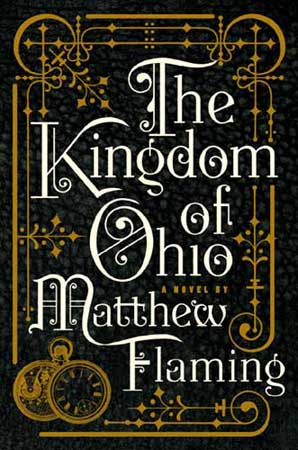
The Kingdom of Ohio

Back to my 2015 Challenge reads.  I was totally sucked into this one by the cover.  But, I've been chugging away at it for the last few weeks, getting distracted by other books and then coming back to it.  That's usually a bad sign, indicating that my attention is not being held.  Which I think is a fair statement.  The narrator is not a natural storyteller, lost in the past as he is, and distances the reader from the action of the book.  


One of this book's biggest problems (related to the above) is that it spends far too much time telling us how crazy and incomprehensible and indecipherable the past events that the book is based on are.  So, when you find out what actually happened, you're left feeling a little underwhelmed.  I mean, the events are improbable, but considering I just read a book with not just time travel, but Egyptian cults, Gypsy doctors, insane clowns, and Samuel Taylor Coleridge being a bad ass, they're really not that out there.

The other problem is that the relationship that develops between Peter and Cheri-Anne is hard to believe.  They know each other for about a week, and have so little in common, and yet he pines for her the rest of his lifer?  It can happen, but the book doesn't really sell it.  And, this book is badly titled. There IS a Kingdom of Ohio, but it's not center stage.  Not much of it takes place in the Kingdom.  It puts you on the wrong footing right away.  Similar to how the stuff from the Roanoke Colony is introduced so late in the book, it's a distraction.

But I'm not being fair.  There are wonderful moments: meditations on memory and the relationship between past and future.  Detailed looks into how traveling through time can affect a person's psyche.  Interesting takes on early America and its technologies.  I want to say that this is a realistic look at time travel/world hopping, but that's ridiculous, isn't it?  A realistic look at unreal things, lol.  But if those things were possible, I bet this is how people would react.  Not instantly figuring out the circumstances and making brilliant and death defying moves, like characters in a blockbuster.  They probably would be hurt and confused and longing to get back to where they belong.

What really interests me, though, is that the author said he was influenced by Mark Helprin's Winter's Tale, a book that is also on my list to read this year.  I'm wondering how this one will compare!    

Final call:


The good stuff averages out the bad stuff, so let's just leave it at three stars.      

Saturday, August 8, 2015

The Anubis Gates

I do know how this book made it on to my list   I saw an article about the origins of steampunk and it included this title, saying that it's also one of the best science-fiction books around.  Then I found it at a library book sale.  Done, and done!  Since I feel like I have a lot of random thoughts about it, let's just do a bulleted list:
  • The Anubis Gates reminded me of a book from earlier this year, Drood.  That book also has Egyptian cults and lots of subterranean London action, so maybe it's not so surprising.  Both books were also on the Dickensian side of things, although at least in The Anubis Gates, Dickens himself is not a character!
  • This is one of the just plain cleverest books I've gotten my hands on.  The plot zips in and around and over itself perfectly.  There are layers and layers behind what's happening and why.
  • The mystery of William Ashbless is a hoot.  You figure it out pretty quickly, but then find out that you really didn't know everything after all.
  • The ending is just fantastic.  One of the more perfect ones I've come across lately.
  • The part that happens in actual Egypt sticks out like a sore thumb from the rest of the book but it's one of the best parts.  So is the trip back to the 1600s.
  • When the book tips over into the horror side of things, it gets really horrific.  The idea of a body-switching werewolf is especially terrifying, not to mention an evil clown on stilts.
  • Who knew Samuel Taylor Coleridge had it in him!
  • This is one of the earliest examples of steampunk, and it's really interesting to compare it to the genre now.  For instance, aside from magic/sorcery/time travel, there really isn't much in the way of alternative history, or steam-driven technologies that didn't exist at the time.  No dirigibles, no protagonists running around with aviator goggles.  No people with mechanical eyes or other body parts.  But the atmosphere is there, for sure.  The high action, the humor, the tongue-in-cheek feel to the plots you sometimes get.  It also reminds me very much of the Parasol Protectorate books, minus the technological fancies.
  • It's really wordy!  I found a long paragraph that was actually one sentence!
Final call:
I'd give this book the time of day, any day.  And I don't think you have to be a sci-fi or fantasy nut to enjoy it. 


Friday, August 7, 2015

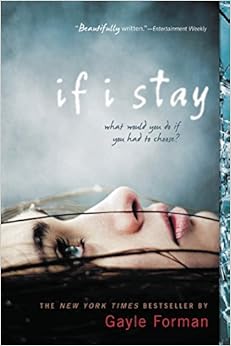
If I Stay

I'm not sure how this book got onto my list, except that sometimes I do like to dip into the Young Adult section of the bookstore.  There are some great quality books there.  

This one is fine.  The plot turns around 17-year old Mia, and whether she'll decide to stay here on earth and live, or move on and die, after she is grievously injured in a car accident that kills the rest of her immediate family.  She's essentially having an out-of-body experience for the bulk of the book.  There are a lot of flashbacks to moments with her family and boyfriend.  Everyone is actually pretty well-adjusted and pleasant.  

There's a lot less ruminating over the meaning of life and the loss of it than I expected, and more of it centers around her boyfriend than I expected.  It's a very short book.  

What bothered me the most is probably pretty minor.  We can't just have Mia, who plays the cello, and Adam, who plays in band.  It has to be Mia, the best cellist Oregon has ever produced, and Adam, whose band is on the verge of making it big.  I think the book would have been more powerful if the characters had been a little less exceptional.  Similar to my complaint about Bel Canto.  With all these super fantastic people running around, the whole thing becomes a little less believable.    
   

Final call:
 Is this a powerhouse?  No, but it's a lot better than some of the mindless crap that's out there for teens!


Sunday, August 2, 2015

Bel Canto

When I read Servants of the Map by Andrea Barrett, I told you that there were some authors I knew I would like, long before I actually read their works.  Well, Ann Patchett is another one.  I own almost all of her books, but this is the first I've read.  I think I waited so long because I knew the story would be an emotional rollercoaster from the description on the back.  The set up sounds completely fabricated- an evening party full of international elites is taken hostage, and the ordeal draws out over four months, while the hostages and terrorists find themselves forging relationships they never thought they would or could.  But what floored me is that the set up is based on a true story, and not as loosely as one might assume.  An actual terrorist attack in Lima, Peru, in 1996 very closely mirrors the structure, or frame, of Bel Canto.  This is important, in a book that is often criticized for being over the top in relation to reality.

I do see what the critics mean.  I think the book would have been more meaningful, in a way, if the younger terrorists hadn't turned out to be savants limited only by their lack of education.  I also wonder if the degree of the miraculous talents weren't skewed by the hostages' closeness to the terrorists.  Was Cesar really capable of becoming a world class opera singer, or did Roxane just really, really, really want him to have that capability and project it on to him?  Was Carmen really that intelligent, or did love color Gen's assessments?  We don't know.  But Patchett's style is such that I think she would have told us, if that were true.  So, there are issues.  

I also think that every book has flaws, flaws that might be tiny or might be gigantic.  The trick, or the magic, comes when it manages to make you love it anyway.  Which I do, with Bel Canto.   In a weird way, reading this book reminded me of The Secret History by Donna Tartt.  Now there's a book with legions of fans where the magic did not work for me.  All I could see were the flaws.  

There are so many beautiful moments in Bel Canto, and a focus on the good in human nature.  That's actually rarer than you would think, in the literary world.  Patchett is wordy, but her sentences flow like water and still manage to come across as concise.  She includes so much subtle humor, playing up the irony of hostages enjoying their time with their captors.  She makes a ton of sharp observations, and you learn so much by seeing how each of the main characters view the world and the others.

Final call:


In the very early stages of the book, you learn that the terrorists do not survive, and you think, "Good."  By the end, you think, "What a shame."  And that's nothing short of amazing.


Friday, July 17, 2015

Two Booker Prize Winners: Hotel du Lac and The Bone People

I'm so far behind in reviewing books that you're getting a two-fer.  These books both won the Booker Prize, and they both left me a little cold.  So why not pair them here.

First up, Hotel du Lac by Anita Brookner.  This was a very late addition to my 2015 Challenge List, one I never told you about.
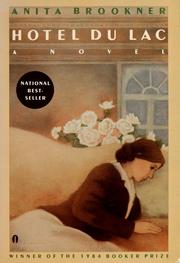
This is a slim little volume, certainly eligible for my "Perfect Little Books" shelf.  But I don't think it's going to get there, not quite.  This is a Booker Prize winner, so my opinion of it takes me a little by surprise, although from what I read, many thought it was not the strongest book in the year it won.

Don't get me wrong, I more or less enjoyed reading it.  But I do feel a failure to connect with much of the book's intellectual heft.  I think, maybe even hope, that it's because I've grown up in a different era from Edith, the main character.

This book is very much about the feminine world, i.e., the world as inhabited by females.  I don't think you can accuse Anita Brookner of feminism, though.  She spends a lot of time looking at women with personality problems who happily or unhappily fill the roles society has provided for them.  Except, maybe Edith, who by the end of the book, has bucked society's expectations of her not once, but twice.  (Although I don't know that returning to England to continue in her mistress role is really that avant garde.  Women have been mistresses for millenia.  You could argue it's a traditional role.)

Edith spends an increasing amount of time in the book conversing with Mr. Neville.  It's a good chunk of these talks, and Edith's observations on other characters, that sometimes remain opaque for me.  Edith's saying words, and Neville responds with more words, and I understand them all individually, but taken together I'm not always sure what they are getting at.  This is just intermittent, though.

Final call:


Really, this is a three and a half.  The writing is artful, but didn't really speak to me.  I wouldn't put it high on your list.

And now, for The Bone People by Keri Hulme.
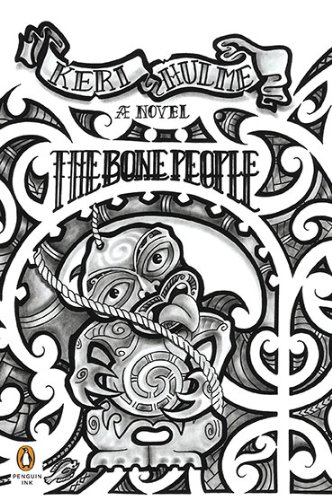
This is a really cool book in a lot of ways, with so much potential. Sure the narrator is an author stand-in, and she has all these super-duper-but-unrealistic-to-find-in-one-person talents. But I really like the concept of the three main characters all needing something from each other to heal, and seeing how Kerewin builds bridges despite being hurt and volatile herself. I like the weird artsy stuff that blends its way into the narrative. I like the strange little inventions that Kerewin and Simon create. There's a lot of humor in the book, although a lot of it's grim or sarcastic.

I do not appreciate at all how the abuse was handled. I read the book as each of the three - Kerewin, Joe, and Simon - having to face crisis and come through transformation in order to heal emotionally. But Simon really got the short end of that stick. Kerewin, and Joe especially, take their failings out on Simon. Then they both go through their own near-death experiences and are "saved" by some mystical processes that aren't really clear. They come out the other side, somehow, wiser and more in tune with their Maori heritage. (Joe's story requires some extremely wild leaps of imagination, too.) So these two are supposed to be redeemed, I guess, by all this.

Now take Simon. He's 6-7 years old, he's a mental mess for good reason, and he's often drunk or drugged out of his mind in the story. Joe abuses him. At first you think it's "just" a whack here and there. Later, you realize it's serious and frequent beatings. Then, Joe very nearly kills him and does cause permanent damage to Simon's hearing and facial structure. Jeeeeesus. I don't think there's a character under any sun in any universe that can come back from that, for me. Certainly not by flinging himself off of a cliff, experiencing some strange interactions with an old guy, and then inheriting the old guy's secret Maori god-thing while being miraculously healed himself.

Of course, at the end, Simon still loves Joe, and Kerewin, who is indirectly responsible for the final savage beating. Warped love is all Simon knows and he isn't the best judge of what's good or right in the world.  What 6 year old is??? I think that's what angers me - that Simon bears it all in this story. No mystical healing potions for him, he's left with his horrible scars and lost hearing and a devoted love for those who did the damage. While the very culpable adults are absolutely healthy and just feel guilty every once in a while when they notice Simon's face. The author doesn't seem to see him as a real boy at the end, just this construct to help Joe and Kerewin finally get in touch with each other and their inner Maori. Which I guess is fine, but don't think the average reader will appreciate it, given the sensitivity of the topic.

Final call:


Another Booker Prize winner that comes close, but just sorta misses the boat at the end.


Tuesday, July 14, 2015

Orange is the New Black

A nonfiction book!  What a change of pace!  For those who have seen the television series about life in a women’s prison, this is the book its loosely based on.  To sum it up very quickly:  well-to-do white girl goes to federal prison on an old drug charge, makes friends, and influences people.

There are some eye-opening pieces of information here.  That the federal system can move so slowly, to the point that people who have reformed themselves are doing time for charges in their relative youths.  Piper Kerman, the author, waited for six years to find out the disposition for her case!  The crimes she committed were ten years old when she entered prison.  It all seems a bit ridiculous.

For the actual time in prison – there were a lot of astute observations, and they were blended in to the general story well enough.  Nothing came across as preachy or as having an agenda, except for Kerman’s opinion on the US’s war on drugs, which I think is one gaining more and more traction of late.

As an piece of writing – I wasn’t terribly impressed.  Pretty average stuff, really.  It was a bit hard to follow a timeline.  Something would sound endless, and then you’d realize it was a day or two. People were introduced in a way that made you think you should know who they were, when it was really the first time they’d been talked about.  Little trip-ups like that.

I will admit, one aspect of the book rubbed me the wrong way.  I’m sure Kerman was only trying to demonstrate how her perspective cannot be said to be an average one.  That she had more resources than most people, both in dealing with the legal aspects of her case and in making prison life more bearable.  But she comes across as weirdly boastful many times:  I had so many visitors.  My family still loved me despite everything.  I had hundreds of books mailed to me.  These hard-boiled women procured numerous difficult-to-find things for me because I was so awesome.  My friend created an executive job in his business so I could work post-release.  It got a little old after a while, although I am sure it was not done with deliberate intent.  It also read to me as Kerman knowing she was privileged, but still possibly not aware of just how privileged.

Final call:


I actually brush up to similar issues (what is the purpose of prison, do nonviolent people really belong there, how much rehabilitation should occur, how can people reintegrate in society) in my day job, and while Kerman’s story is interesting, the questions it raises are really pretty basic now.  I’m happy to say that, looking back over the 10 years since the book was published, there has been plenty of public policy debate about these questions.  Unfortunately, it seems to be because we can’t afford to put more people in prison, not because people see a better way to deal with crime and punishment.


Wednesday, May 13, 2015

Alias Grace

Oh, Margaret Atwood.  It's just not fair.  How good of an author you are, I mean.  This is the fourth book of yours I have read now, and you seem to be seriously gunning for the top of my personal 'best of the best' list.  

Actually, this was one of two books on my 2014 Challenge List that I had to hold over to this year, and it is is something of a departure for Atwood - a book based on real events, with a fictionalized account filling in the gaps but not giving us clear answers.

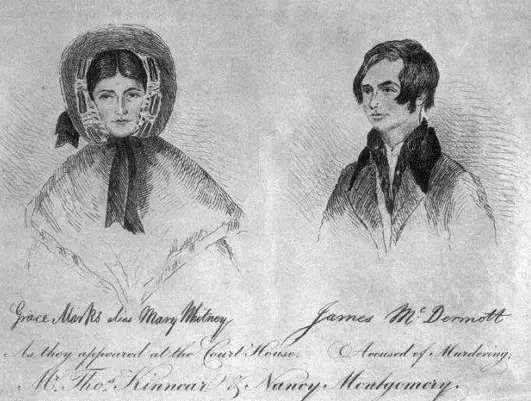
The Grace of the title is Grace Marks, a girl not yet turned 16 when she became involved, to some degree, in the 1843 murder of her employer and his mistress.  All within about 2-3 weeks of starting work there as a maid.  She and a male hired hand named James McDermott were convicted of the crime, and both were sentenced to death.  McDermott was hung, while Grace's death penalty was commuted and she was eventually pardoned.


None of these things are spoilers, they're all facts of the case and a matter of historical record.  What Atwood does so wonderfully is give life to Grace and her peers, and make a case for their motivations.  In Alias Grace, Grace has witnessed the death of her mother, the disintegration of her wastrel father, and the loss of all her family, either to death or distance.  Despite this, Grace's voice is wonderfully practical, and capable, and at 15 she can run a household far better than I can.  And yet she, at the very least, fails to so much as try to prevent the murders, and may have even fully participated.

Atwood creates a few other characters to frame the story, and allow Grace to tell hers.  In doing this, we see that the societal attitudes of the era were truly terrible toward women, but that men were harmed, too, although usually in more subtle ways.  Which, I think, is the point of the book, at the bottom of it all.  Crazy, out-of-whack gender crap is bad for everybody.  

In any case, it's amazing when you can read a book like this, come away with very few solid answers about the level and nature of Grace's involvement, and still think its one of the best books you've ever read.  But that's what happened!  There are eerie and beautiful pieces of imagery, particularly dream sequences (which I usually find awkward and a slight turn off).  Images of sheets, and quilts, and beds and women.  Souls stuck in rooms, unable to ascend.  Wonderful descriptions of the Canadian countryside.  Haunting, just haunting.

Final call:
        
I could quibble with a few things, here and there, but I'd feel like I was complaining that no one plucked the seeds from a big delicious red strawberry.  Highly recommended.


Thursday, May 7, 2015

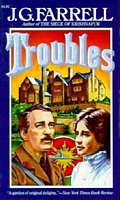
Trouble with Troubles

This is the second of two books with Irish connections that I wanted to read prior to our vacation there later this year.  Now that I have read both, I'm thinking there are probably better ones I could have picked, lol.  Neither particularly make you want to go to Ireland, that's for sure.  I have to say, the edition I have has a goofy cover.  I don't know why but it just hits the wrong note with me.

I guess then maybe its not too surprising that the rest of the book went on to be slightly off key, too.  The first issue was just that it took me a long time to figure out the tone of the book.  It's pure farce, but its slower and more detailed than most.  The setting and the people are all symbols, and don't really act as you would expect.  The second issue is the dark humor.  Now, I love dark humor, but hoo boy, this was DARK.  Imagine Three Men in a Boat with guerrilla warfare, abundant animal cruelty, and near-rapes.  I have to wonder what cats ever did to Farrell.  I'm sure they were symbols for something, too.

But on the whole, this was a timely read.  This book follows a group of Anglo-Irish living in a crumbling hotel in Ireland during the years (1919-1921) that Irish Nationalists were clashing with the ruling British in extremely violent ways that eventually led to Irish independence.  The violence is mostly a backdrop, which becomes illuminated by the attitudes and actions of those in the hotel, those of the British "status quo."

This is perfectly illustrated when the hotel's owner grouses about his exceedingly poor tenants stealing from his field crops.  The protagonist of the book, the Major, then points out that you can't expect people to willingly starve themselves to death to appease the owner's sensibilities.  Of course this falls on deaf ears.

All in all, a lot of the attitudes and actions remind me of current recent events in the U.S., although of course the political context is different.  But a privileged and powerful group not understanding why a disenfranchised and impoverished group might resort to violence, that sounds awfully familiar.

Final call:

Troubles is clever and insightful but still didn't win my heart over.  I certainly wouldn't tell anyone to not read it, though!

Sunday, April 19, 2015

The Gathering

There are two books by Irish authors on my Challenge list this year that I wanted to read before we actually travel to Ireland:  Troubles by J.G. Farrell and The Gathering by Anne Enright.
The Gathering fills me with ambivalence.  Part of the issue is that I don't have much common ground with the characters naturally.  A Protestant American only child is very far from the sufferings felt by a child from a very large Irish Catholic family.  But having an unfamiliar point of view isn't that uncommon, who wants to read only books about situations they know about?  Something else is wrong, too.  

I think it's mostly that Veronica Hegarty, the narrator, does a pretty poor job of explaining things.  She keeps everyone, even us, at a distance.  After a short while, you realize she's miserable and has a hard time distinguishing memory from imagination.  She also has a very unsettling way of referring to her body and everyone's genitalia in the most awkward and uncomfortable ways possible.  The reasons for this emerge, but like most books with unlikable first person narrators, it makes for something of a grueling read.

Another thing I have noticed is that if the back cover of a book makes reference to a mysterious family secret with long-term repercussions - nine times out of ten it's going to be sexual abuse of a child or teen.  Spoiler alert:  The Gathering is one of the majority.  That may actually be why Behind the Scenes at the Museum was so refreshing - now there's a family that was very thoroughly messed up but next to none of it had to do with sexual abuse.

Not saying by any means that it's not a topic worth writing about.  But it's almost cliche, the way it comes out in The Gathering.  

All that being said, Enright is a fine writer.  She has a great style.  Sharp little sentences that can nick you like a knife.  The best part is that the end does seem to point to optimism in the face of all of Veronica's problems.

Final call:
Skip this if you don't like reading stories narrated in the first person by characters who have a lot of issues, to put it mildly.  Veronica's a tough pill to swallow.


Tuesday, April 14, 2015

Behind the Scenes at the Museum

Remember when I said that sometimes I could just tell ahead of time that I am going to like an author?  Kate Atkinson fit that bill for me, and I am happy to say I was right, again.


I am even more impressed that Behind the Scenes at the Museum is her debut novel.  This novel traces Ruby, in her own words, from conception (literally) through her childhood and teenage years.  A coming of age story and one with a double twist - maybe triple twist - I didn't see coming.

Ruby's family is a mess.  We get Ruby's story, but it's interspersed with a troubled family history going back to Ruby's great grandmother.  Ruby's extended family has something of a curse on it, in that many of them die young.  Many of them are also unhappy, and find themselves depressed, considering or vigorously participating in adultery, yelling at their children, ignoring their responsibilities, or otherwise being on the crazy end of human existence.  A few are probably actually psychotic.

The focus is very female here, and the book is full of women who are unsatisfied and unfulfilled by their lives.  Most of the men remain distant figures, although we do get shining glimpses of them in both World Wars.

That Ruby and her surviving sister find their ways through this terrible weight of history is amazing,

Final call:

I am giving this the full complement of stars because I have rarely found an author who can so brilliantly dance the fine line between depicting real life and farce.

I think we have probably all had moments in the lives of our families where we find ourselves thinking, "This cannot possibly actually be happening, this is like something out of a bad movie or a cartoon."  Times where things have gone so far off the rails as to come around the other side and you just have to laugh or else you'll cry.  Atkinson is absolutely brilliant at this.


Sunday, April 12, 2015

Katherine

I can't remember where I first heard about this book, but I do remember where I first heard about the title character here, Katherine Swyndon.

I have bit of a penchant for books that follow the War of the Roses and the Tudor period of English history.  I think it was Alison Weir's book The War of the Roses that mentioned her briefly as the woman John of Gaunt, the 1st Duke of Lancaster, married for love and who thereby became the ancestress of the Tudors and many other Very Important People.

Somewhere along the line, I heard that Anya Seton's book Katherine is an excellent portrayal of Katherine Swyndon's life.  I will say this for it - it's O.K.  I think its also important to remember that this book was written in 1954.  Not as much was known of Katherine's life then as it is now, and attitudes were different.

There are a lot of things that bug me - Katherine taking care of her estate at Kettlethorpe being one of them.  A few times we expect it to be a transformation and a calling for her, and each time she more or less abandons it when Lancaster calls.

Second, Katherine in this book has a fictional serving woman called Hawise.  Hawise and her family are convenient fictional devices, but they are stretched to the point of incredulity.  For example, there is a point where Hawise says, essentially, "Oh don't worry about me missing my husband and child, I like you much better than either of them!"  Really???

Third, John of Gaunt is underwhelming in this book.  He's a great and influential historical figure, but the book more or less makes it seem like all of his good qualities arise out of not being obviously insane, like most of his contemporaries.  And there is one point where he does go a little bit insane, so there's that.

And lastly, the idea that one of John of Gaunt's retainers took the initiative to murder Katherine's husband just takes the cake.  From what I can tell, it was a real rumor at the actual time of Hugh Swyndon's death, but the novel uses it to have Katherine avoid making the negative moral choice she very probably did in real life: becoming John's mistress while still married.  Come on, that's the easy way out!

There were also plenty of things I liked, and of them, probably the best is the attention Seton paid to the religious feelings of the time.  And to the role that religion played in the life of most people, including Katherine.  The moments she spends at the end of her pilgrimage are lovely.  Most likely complete fiction, but lovely :)

Final call:

This is a long book for a somewhat slender payoff.  Unless you're an aficionado of the time period, I'd skip it.


Monday, March 16, 2015

A Strange Pairing

I recently read two books that are similar on one level but very different on others.  Both of them are on my 2015 Challenge list, but it was more or less chance that I read them back to back.


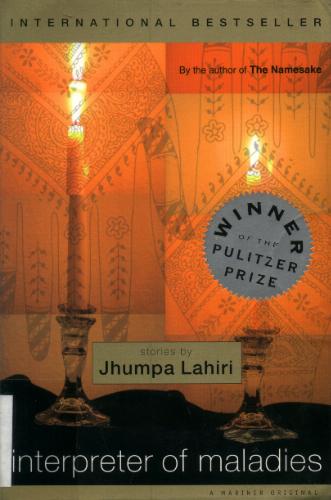
Jhumpa Lahiri's Interpreter of Maladies is a short story collection.  I understand that the first story and the title story tend to be thought of as the best, but I have to say that I enjoyed the second story very much.  A tale of American children of Indian descent out trick-or-treating, while a visiting Bangladeshi scholar doesn't know if his family is dead or alive because of ongoing political turmoil surrounding the partition of Pakistan and Bangladesh.  That some children are imagining bogeymen and collecting candy, at the same time and on the same earth as children who may be victims of a civil war.  Those images had staying power for me.    

Final call:
Lahiri has a straightforward style, and her stories appear much simpler than they are.  I think most people would enjoy this book, be one of them.

____________________________

The second book I read is A History of the World in 10 1/2 Chapters by Julian Barnes.  I have read Barnes before, two books actually, but wow.  This one takes the cake.  If I had a graphic for six stars, I would give it that.  


A History of the World is a novel, but you could argue that it's also a collection of short stories.  Ten stories and a personal essay that counts as the half.  At least one of the stories and the essay verges on nonfiction, and the story has a brilliant piece of art criticism.

So, it has a quirky structure and quirky topics for some of the chapters, there are extreme feats of imagination, and plenty of humor, too.  But this is a philosophical novel, at its base.  It seems to read as a deconstruction of religion, but turns into something very different, I think.  His message seems to be that people should seek objective truth, even if it doesn't exist, and be judged by the love they show their fellow humans.  And, that neither history, art, religion, or myth can supply objective truth.  I can't really argue that and have rarely seen it illuminated so creatively.  

I love this book the same way I love Cloud Atlas.  For tackling the big questions, although Barnes does it a lot more directly, even lapsing into his own voice (maybe).  The chapters at first don't seem at all connected, but eventually subtle connections, direct connections, and thematic similarities emerge.  By the end, I realized that the stories are having a philosophical argument among themselves, or at least, demonstrating the principles in the half chapter.

I saw this book compared to Joyce, Calvino, and Mitchell, but you really just have to read it to see what I am talking about.  I also remember thinking this book makes a nice, optimistic pairing to Coetzee's Elizabeth Costello, which seemed to say that Western Civilization was bankrupt and heading for moral crisis.

Final call:
I cannot recommend this book highly enough, but I also don't think the average person would like it.  I'm pretty sure this shouldn't be your first foray into books with disjointed narratives written by author/philosophers.  Maybe start with David Mitchell and Ghostwritten or Cloud Atlas for a taste of where this kind of book can take you.


Saturday, March 7, 2015

Drood

Drood is a retelling of the last five years of Charles Dickens' life.  Dan Simmons takes a lot of license, but also stays truer to the history than I realized.  I mean, a lot of the crazy stuff in the book did actually happen.  Maybe not the ritual cult based on ancient Egyptian practices, but the rest, yeah.


I have to say, this book's cover is what caught my eye. I'd never have picked it up otherwise.  It strikes the perfect mood.  The book is purportedly about Dickens, but the narrator is Wilkie Collins.  Collins is, of course, another famous writer from the Victorian era, and the two men were frenemies for much of their lives.  And, between Dickens and Collins, I've actually read a book by Collins before.  The Moonstone, which more or less launched the English detective novel as a genre.

Wilkie Collins

I still can't decide whether I love or hate Drood.  It has some exceedingly clever moments.  And some boring ones.  It literally is the last five years of Dickens' life, no moment spared.  It's this big buffet full of rich food, and you like everything on the menu but just get so danged tired of eating after a while.

The high points: an opium-addled apparent sociopath for a narrator, an interesting take on the ending to Dickens' unfinished The Mystery of Edwin Drood, the finer points of life in London slums, and a high density of very nice turns of phrase and sly witticisms. 

The low points:  the slum visits get old after a while,  the sheer length of the book gets old after a while, the role of Ellen Ternan confuses me, and Caroline's marriage and subsequent return to Collins is gonzo. I mean, what?  Opium can only account for so much here, folks.  

Final call:

I'm not sure if I can recommend this.  Maybe if you are a big fan of Dickens and Collins and the massive tomes they wrote.  But Simmons adds a fair amount of horror, so that limits the audience even further.  Proceed with caution here :)


Saturday, February 28, 2015

The Maid's Version

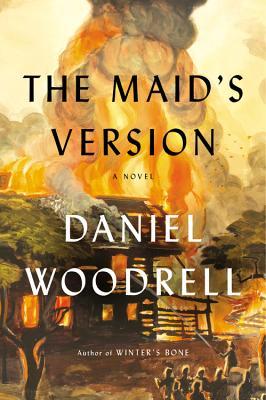
If you are familiar with the movie Winter's Bone, then it's interesting to note that Daniel Woodrell is the author who wrote the book Winter's Bone.  I read that book probably three years ago or more, and was impressed.  There's a mystery in it that is not at all easy to solve.


The Maid's Version is his newest book.  The central tragedy, where a dance hall explodes and kills dozens of people in small town 1920s Missouri, sounds a little fantastical but is based on a true story.  In real life, the explosion occurred in what would become Woodrell's hometown, and the cause of the explosion was never uncovered.  In the book, the relationships between various townspeople slowly emerge, until the ultimate cause of the explosion is revealed in the last sentence or two.

Unfortunately for me, I read this as an ebook that has a lot of extra material at the end.  So I was approaching the end of the story, while the Kindle meter read as 80% completed.  It really messed up the pace of the story for me.  

That's not the book's fault, of course, but I do wish I had known how close I was to the end before I flipped to the next page and saw the author's notes.  The only criticism I have with the book itself is that it sometimes hard for me to tell who was narrating - the story jumps around in time and from character to character.  But the action itself was always clear. 


Final Call:
Some really fine moments in another short read, well worth it.


A Virtuous Woman

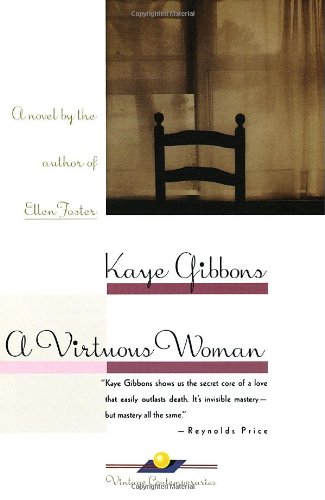
This is a very, very short novel.  That said, it's wonderful.  I think what surprised me more than anything is that it gets pretty mixed reviews on Goodreads.


I think the problem is that, like ruraldating.com, "city folks just don't get it."  I'm joking, of course, but I think there might be a kernel of truth in there, somewhere.  Jack and Ruby are what most would call rednecks, although Ruby didn't start out that way.  They might be hard to relate to, for a lot of people.

Anyway, obviously, I'm not one of them - everything here rang true to me, except the very end.

The frame of the book is that Ruby's dying of lung cancer, and Jack's dealing with it, and you learn their history along the way.  Plenty of raw emotion and people making do with what they have.  I amazed at how much good stuff is packed in to such a short book.


Final Call:

This will take you about 3 hours to read, tops.  Please invest the time :)