Showing posts with label Three Stars. Show all posts

Wednesday, March 21, 2018

Were We Really Though?

We Were Liars
by E. Lockhart

Read on December 26, 2015. 

This is a well-reviewed young adult book, and I will say that it is solid. It did not amaze me, but has a lot going for it. I did not figure out the twist (I never figure out the twist). Even better, I was sure that I did know what it was, only to find out that I was wrong. That built-in red herring was a nice touch. 

On the negative side, the entire heft and weight of the book lies in obscuring a few of Cadence's actions one fateful summer. If this story were told chronologically, it would fall flat unless great care were taken with additional character development, viewpoints from other characters, and a wealth of background information. I think I am trying to say that the surprise ending feels like a gimmick to give people a reason to read what is otherwise an extremely simple, bare bones story.  


Final Call:


I like chronological shenanigans when the book is a heavy-hitter in other ways, too, but this one I think leaned on it too much.

If you like this, try:
I feel like I don't read enough Young Adult titles to offer anything meaningful. This article has 10 suggestions that seem legit, though!


Saturday, February 10, 2018

Hamburger Helpers, Running Around Causing Problems

Annihilation
by Jeff VanderMeer

Read on October 31, 2015.

The cover is gorgeous.  The premise is interesting.  It's gotten a lot of buzz, even if the buzz has a sort of cult feel to it - not mainstream, definitely weird, but supposedly terrific.  I even bumped this into my to-read list over the discouragingly big bunch of my yet-to-be-read Challenge books for this year.

Instead this is a contender for most disappointing read of 2015.  It's not that its bad, per se.  Okay, well maybe it is.  The only way I can admire it is if I look at the writing itself as creating a state in my brain that is akin to what would happen if I tried to read a normal book while I was in Area X.  

The text seems distorted in an unusual way, that's what I'm getting at.  Sentences just don't track right - the words don't quite make a sensible thought. The flow of the book is odd. "Here's this weird green thing. I hid my inner self from my husband. I see the lighthouse."  If all this is on purpose, it might be brilliant, but I don't think that it is.

There's not much meat to build atmosphere or context either.  A complete list of what we get is:  a tower tunnel, a scary blob, a lighthouse, a base camp, something that moans, a photograph, a pile of paper, and three women. Possibly an island?  And that's it.  

The other problem here is that it's a psychological study told in the first person, and that person is a bit of a wet rag.  She never draws the obvious conclusion about a situation. She describes things in opposite ways, at least one time doing it in thoughts that are only inches apart on the page.  She uses the word really in dialogue. A lot.  

Then there's this talk of hand-shaped fruiting bodies, and after that, all I can picture are lots of little Hamburger Helpers running around causing problems.


Final call:


Maybe two and a half. At least its quick?  To give this perspective - this is the first in a trilogy.  Using page counts, over three Annihilations could fit inside The Passage, which is itself the first in a trilogy.

If you like this, try:
H.P. Lovecraft
Other books in the 'New Weird' genre.


Wednesday, October 28, 2015

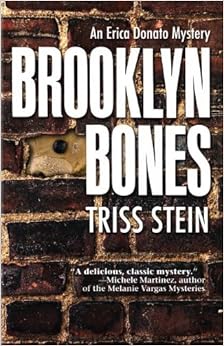
Brooklyn Bones

I don't think I've read a book by someone I've known, however meager the acquaintance, excepting academic books.  But here's one. I have to say, I expect the worst from genre mystery books these days, and Brooklyn Bones is solid.  It avoids a lot of traps.

Erica is our main character, and she has her head on strait.  The relationship between Erica and her daughter is really sweet, even if it fraught with teenage angst, and Erica always acts for her daughter first.  Really the only criticism I have is that the mystery seems to coalesce around Erica and then resolve itself without much action by Erica herself.  I'm not even sure that's a criticism.  It's just different from other mysteries.  But that's how I think Brooklyn Bones stays true - a lot of books veer off course because the hero/heroine has to take nonsensical or contrived actions to move the plot forward, and here Stein finds other ways to get to the end.  

This is definitely not hard-boiled, or even much of a thriller, per se.  But it is a nice, quick read of the cozy variety.

Final call: 

Monday, August 24, 2015

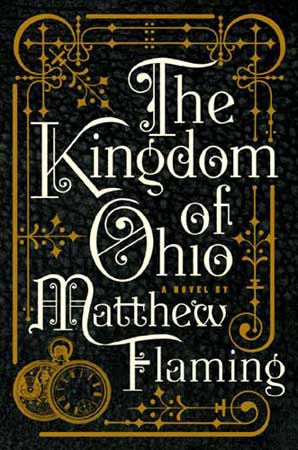
The Kingdom of Ohio

Back to my 2015 Challenge reads.  I was totally sucked into this one by the cover.  But, I've been chugging away at it for the last few weeks, getting distracted by other books and then coming back to it.  That's usually a bad sign, indicating that my attention is not being held.  Which I think is a fair statement.  The narrator is not a natural storyteller, lost in the past as he is, and distances the reader from the action of the book.  


One of this book's biggest problems (related to the above) is that it spends far too much time telling us how crazy and incomprehensible and indecipherable the past events that the book is based on are.  So, when you find out what actually happened, you're left feeling a little underwhelmed.  I mean, the events are improbable, but considering I just read a book with not just time travel, but Egyptian cults, Gypsy doctors, insane clowns, and Samuel Taylor Coleridge being a bad ass, they're really not that out there.

The other problem is that the relationship that develops between Peter and Cheri-Anne is hard to believe.  They know each other for about a week, and have so little in common, and yet he pines for her the rest of his lifer?  It can happen, but the book doesn't really sell it.  And, this book is badly titled. There IS a Kingdom of Ohio, but it's not center stage.  Not much of it takes place in the Kingdom.  It puts you on the wrong footing right away.  Similar to how the stuff from the Roanoke Colony is introduced so late in the book, it's a distraction.

But I'm not being fair.  There are wonderful moments: meditations on memory and the relationship between past and future.  Detailed looks into how traveling through time can affect a person's psyche.  Interesting takes on early America and its technologies.  I want to say that this is a realistic look at time travel/world hopping, but that's ridiculous, isn't it?  A realistic look at unreal things, lol.  But if those things were possible, I bet this is how people would react.  Not instantly figuring out the circumstances and making brilliant and death defying moves, like characters in a blockbuster.  They probably would be hurt and confused and longing to get back to where they belong.

What really interests me, though, is that the author said he was influenced by Mark Helprin's Winter's Tale, a book that is also on my list to read this year.  I'm wondering how this one will compare!    

Final call:


The good stuff averages out the bad stuff, so let's just leave it at three stars.      

Monday, August 10, 2015

Three Romances - It Happened One Night, A Husband's Wicked Ways, & More than a Mistress

These are not part of my challenge, but sometimes, you just want to read what you want to read.  I found the first two of these recently, and gave them a try.  It Happened One Night is a set of four short stories, each by different authors.  The lead story is a Stephanie Laurens one, an author I've read a lot of.  The other three are new to me.  These were all kind of okay - not great, but not horrible.  Which is nice when horrible quality is pretty common in this genre.  I think the last story might actually be my favorite, because it's the most unusual of the bunch.


I found A Husband's Wicked Ways on the bookshelf at work.  We maintain a borrowing library, more or less, there.  The plot line, involving the Napoleonic Wars and spy work, reminded me of a few of Stephanie Laurens' works so I gave it a shot and ended up enjoying it quite a bit.  It's the third in a trilogy so it would have been better to start at the beginning, but it didn't hurt to read this one first.  My only complaint is that the ... ummm ... more romantic parts of the book are just cold and weird, despite the banter between the two leads normally being snappy, entertaining, and warm.  it's a strange juxtaposition.  And the master spy ends up being not so bright toward the end.      

I have had More than a Mistress for a while now, and decided to polish it off, too. I think I liked this one the most of the three.  A lot of the typical plot points are hit, but the "hero" is a little less annoying than usual, and the pot shots that the two lead characters take at each other are pretty humorous.  

Final call:


Three stars to all.

These are pretty decent if you like Regency-era historical romances.  The plots are all a bit contrived, but how could they not be?  People didn't act like this then!

Friday, August 7, 2015

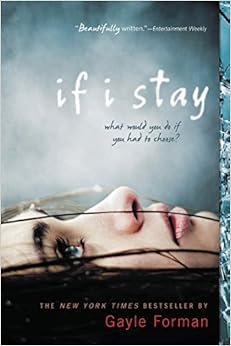
If I Stay

I'm not sure how this book got onto my list, except that sometimes I do like to dip into the Young Adult section of the bookstore.  There are some great quality books there.  

This one is fine.  The plot turns around 17-year old Mia, and whether she'll decide to stay here on earth and live, or move on and die, after she is grievously injured in a car accident that kills the rest of her immediate family.  She's essentially having an out-of-body experience for the bulk of the book.  There are a lot of flashbacks to moments with her family and boyfriend.  Everyone is actually pretty well-adjusted and pleasant.  

There's a lot less ruminating over the meaning of life and the loss of it than I expected, and more of it centers around her boyfriend than I expected.  It's a very short book.  

What bothered me the most is probably pretty minor.  We can't just have Mia, who plays the cello, and Adam, who plays in band.  It has to be Mia, the best cellist Oregon has ever produced, and Adam, whose band is on the verge of making it big.  I think the book would have been more powerful if the characters had been a little less exceptional.  Similar to my complaint about Bel Canto.  With all these super fantastic people running around, the whole thing becomes a little less believable.    
   

Final call:
 Is this a powerhouse?  No, but it's a lot better than some of the mindless crap that's out there for teens!


Thursday, August 6, 2015

Wicked Plants

This may rank as "The Book I Own With the Oddest Backstory."  I was visiting a local thrift shop and saw this on their shelves.  I have Stewart's The Drunken Botanist so I picked it up, and was quickly fascinated with the artwork inside.  When I went to check out, the owner told me the book was free, because a landlord had called her in to clear out the apartment of a drug dealer and she had found it there.  We both thought it was strangely appropriate, but verging on scary, for a drug dealer to have a reference book on poisonous plants!

This is a small book, with a lot of illustrations.  It won't take you long to read through it.  I picked off chapters here and there before bed and on car rides, and really enjoyed it.  There's not a lot of detail, and sometimes you want more information, but overall it's an entertaining work and not meant to be encyclopedic.  Some of the gruesome illustrations are silly, but the full page etchings of plants are gorgeous.  Many of them almost look fossilized.  I'll paste one in so you can see what I mean.


Final call:
 Lightweight and entertaining.  I'm seriously considering pulling out a few of the illustrations and framing them.


Wednesday, April 15, 2015

Dead Heat

Patricia Briggs is one of my go-to authors, particularly her Mercy Thompson series.  The Alpha and Omega series is closely connected to Mercy's books - quite a few of the characters are in common and a few plot points cross over.  They also make for a nice fill-in for the long waits in between Mercy books :)

So, when I saw that the new Alpha and Omega novel, Dead Heat, was available at the library, I "wolfed" it down.  These books seem like they never take more than a few hours to digest.

This one left me a little cold, though.  Just a smidge below the usual par.  The characters were themselves, the villain was interesting, the subplots were well-handled.  There were just some strange exchanges here and there.  Especially the day when Anna and Charles went out separately to investigate the child abductions - there were times where I had trouble following the flow of the conversation and action.  An awful lot was introduced in a short time period, and it made for an awkward series of very short wrap ups near the end of the book.

There also seemed to be a weird amount of attention paid to peoples' driving skills, considering there wasn't much in the way of actual chase scenes or the need for hell-for-leather driving.

The horse-centric story lines were interesting, and it was nice to find out some big chunk's of Charles' history.  He's been a bit of a blank slate up till now.

Final call:

I wouldn't miss this installment in the series, but it's not the strongest one, either.

Sunday, April 12, 2015

Katherine

I can't remember where I first heard about this book, but I do remember where I first heard about the title character here, Katherine Swyndon.

I have bit of a penchant for books that follow the War of the Roses and the Tudor period of English history.  I think it was Alison Weir's book The War of the Roses that mentioned her briefly as the woman John of Gaunt, the 1st Duke of Lancaster, married for love and who thereby became the ancestress of the Tudors and many other Very Important People.

Somewhere along the line, I heard that Anya Seton's book Katherine is an excellent portrayal of Katherine Swyndon's life.  I will say this for it - it's O.K.  I think its also important to remember that this book was written in 1954.  Not as much was known of Katherine's life then as it is now, and attitudes were different.

There are a lot of things that bug me - Katherine taking care of her estate at Kettlethorpe being one of them.  A few times we expect it to be a transformation and a calling for her, and each time she more or less abandons it when Lancaster calls.

Second, Katherine in this book has a fictional serving woman called Hawise.  Hawise and her family are convenient fictional devices, but they are stretched to the point of incredulity.  For example, there is a point where Hawise says, essentially, "Oh don't worry about me missing my husband and child, I like you much better than either of them!"  Really???

Third, John of Gaunt is underwhelming in this book.  He's a great and influential historical figure, but the book more or less makes it seem like all of his good qualities arise out of not being obviously insane, like most of his contemporaries.  And there is one point where he does go a little bit insane, so there's that.

And lastly, the idea that one of John of Gaunt's retainers took the initiative to murder Katherine's husband just takes the cake.  From what I can tell, it was a real rumor at the actual time of Hugh Swyndon's death, but the novel uses it to have Katherine avoid making the negative moral choice she very probably did in real life: becoming John's mistress while still married.  Come on, that's the easy way out!

There were also plenty of things I liked, and of them, probably the best is the attention Seton paid to the religious feelings of the time.  And to the role that religion played in the life of most people, including Katherine.  The moments she spends at the end of her pilgrimage are lovely.  Most likely complete fiction, but lovely :)

Final call:

This is a long book for a somewhat slender payoff.  Unless you're an aficionado of the time period, I'd skip it.


Saturday, March 7, 2015

Drood

Drood is a retelling of the last five years of Charles Dickens' life.  Dan Simmons takes a lot of license, but also stays truer to the history than I realized.  I mean, a lot of the crazy stuff in the book did actually happen.  Maybe not the ritual cult based on ancient Egyptian practices, but the rest, yeah.


I have to say, this book's cover is what caught my eye. I'd never have picked it up otherwise.  It strikes the perfect mood.  The book is purportedly about Dickens, but the narrator is Wilkie Collins.  Collins is, of course, another famous writer from the Victorian era, and the two men were frenemies for much of their lives.  And, between Dickens and Collins, I've actually read a book by Collins before.  The Moonstone, which more or less launched the English detective novel as a genre.

Wilkie Collins

I still can't decide whether I love or hate Drood.  It has some exceedingly clever moments.  And some boring ones.  It literally is the last five years of Dickens' life, no moment spared.  It's this big buffet full of rich food, and you like everything on the menu but just get so danged tired of eating after a while.

The high points: an opium-addled apparent sociopath for a narrator, an interesting take on the ending to Dickens' unfinished The Mystery of Edwin Drood, the finer points of life in London slums, and a high density of very nice turns of phrase and sly witticisms. 

The low points:  the slum visits get old after a while,  the sheer length of the book gets old after a while, the role of Ellen Ternan confuses me, and Caroline's marriage and subsequent return to Collins is gonzo. I mean, what?  Opium can only account for so much here, folks.  

Final call:

I'm not sure if I can recommend this.  Maybe if you are a big fan of Dickens and Collins and the massive tomes they wrote.  But Simmons adds a fair amount of horror, so that limits the audience even further.  Proceed with caution here :)


Friday, January 9, 2015

The Assassination of Margaret Thatcher

Hilary Mantel is one of my favorite people, based on the first two books in her Cromwell trilogy.  So, when I saw her newest book of short stories on the shelf at the library, I thought, "Why not?"


Only the title story had much of the style that is so captivating in the Cromwell books (Wolf Hall  and Bring Up the Bodies).  That last story is top notch, and quite daring in its way.  The Long QT is another of the stories that stands out from the others.  

The other stories, well, most of them I was pretty "Meh." about.  Interesting, but not knock outs.  

Final call:

Borrow the book from the library, read the last story, and "The Long QT."  Then go read her Cromwell books.


Tuesday, December 2, 2014

Don't Tempt Me

I am still on the fluff train.  Loretta Chase writes romance.  Better romance than a lot of folks, but still romance.  Don't Tempt Me is more or less ridiculous, given its basic plot premise, but the entertainment level is still decent.


This book is basically cotton candy, all fun and no substance.  Don't let that stop you, but don't let it rot your brain, either  :)

Final call:


This may be cheesy romance, but at least its pretty good cheesy romance!


Sunday, November 23, 2014

Out of the Easy

As I was still trying to heal from A Discovery of Witches, a friend loaned me this book.  It's a young adult book, technically.


Some of my favorite books are young adult books, so I was game.  And this was really quite a nice read.  Josie's likable, she's quick on her feet, and she has her human moments, too.  The relationship triangle is not at all what you think at first, that's a plus.  

A few problems here and there, like when characters occasionally break out in modern slang despite living in 1950s New Orleans.  And some things are just too pat, like the heroine deciding she just has to go to the university that a random woman in a book store tells her about, despite having never heard of it before.

Final call:


Maaaaybe even four stars.  There's a fair amount of meat here, and a big helping of entertainment.  It'll only take you a few hours to read it, so you might as well get started!   


Sunday, July 13, 2014

About a Boy

A Fine Balance was emotionally exhausting, so I went for something lighter as a breather.  I just picked this up at  a library book sale.


And for a book that has bullying, attempted suicide, failure to launch, serial womanizing taken to extreme lengths, and more - this is pretty light reading.  But there are a lot of redeeming qualities.  Hornby has a way of just laying a conflict bare in snappy, casual language.  He's great at building characters.

Marcus, especially, is just fantastically done.  You can hear him maturing as the pages turn.


Final call:


It should only take a few hours to get through this.  For that, it's worth it.  Certainly some memorable characters and a laugh out loud moments.


Monday, June 16, 2014

The Fault in Our Stars

I decided to read this book because I saw it on a list of "books to read before the movie comes out this summer," and because Amazon had it on sale for $3 or $4 at one point.


Technically, I believe this is a young adult book, but it's perfectly entertaining for adults, too.  No, not much of the plot is realistic.  Especially the parts that involve the eccentric author of the main character's favorite book.  And the teenagers are all smart and full of witty repartee (if only this reflected reality!).

But it doesn't matter.  There's a lot of laugh out loud moments.  I snuffled my way through the last third of the book.  It pulls at your heartstrings, that's the long and the short of it.  There's some 'meaning of life'  and 'why are we here' stuff that keeps it from being total fluff, but it's close to the line.

Final call:


Give it a shot.  Eat some ice cream and cry like a baby.  Don't feel bad about it  :)


Sunday, February 16, 2014

Labor Day

No, I'm not losing my mind, I know it's February.  I took a break from some of the heavier reading on my plate and picked up Labor Day, by Joyce Maynard.  You may have seen the million commercials for the movie that's based on the book.


This is a really quick read.  Most of the "real time" in the book covers six days around Labor Day, sometime in the 1980s.  There's also plenty of flashbacks and at the end, flashes forward. Since I've seen so many of the movie commercials, in my head, I could only picture Kate Winslet as Adele.  Which is fine, she seems like a good fit.    


A few observations - the story seems to focus on sex and body parts an awful lot.  Then I realized, yes, the narrator is 13-year old Henry. Duh.  I've never been a 13-year old boy, but as far as I can tell, Maynard does a pretty good job speaking in one's voice. The mother-son relationship is realistic, too.  I imagine I would feel responsible for her happiness, too.  

SPOILER ALERT:  I figured the story would end in a bloodbath of some sort or another.  I was pretty sure Frank would die tragically, or that even worse, Adele would.  Or, that Henry would more directly sell Frank out.  That Maynard didn't take those routes, I think those are good things.  The ending is as happy as it could realistically be.

As a child of the 80s, the pop culture references made me smile.  Actors dressed in raisin outfits singing on TV.  Minivans with sliding doors being a new thing.  Very nostalgic.      

Some of the plotting seems a little too pat - the convict charms the one family in town with an emotionally fragile Mom who is home all the time, a Dad that lives elsewhere with his new family, and a house at the very end of a street surrounded by woods and not very visible from the neighbors?  Incredible luck, that.

But Maynard is very good at dialogue.  Not too many words, and distinct style.  You get a real sense of Adele's character from how she speaks.   

  Final call:  


Labor Day is a pretty classic coming-of-age story, and there's definitely a lot worse fiction out there you could be sticking your nose into.  Just don't expect instant gratification for the leads; they wait and wait for their resolution.   


Thursday, February 13, 2014

Honor among thieves ...

Last night, I finished Fingersmith by Sarah Waters.  Unlike my other year-to-date books, I have read this author before.  So, I knew what to expect, more or less.  

If you know anything of Waters, you have probably heard her described as Dickens with lesbians.  And thieves, and shysters, and all manner of unsavory characters. In fact, fingersmith is an antiquated term for thief or pickpocket.   


If you've read her books before, you also know she can write the saddest stories.  Affinity may qualify as the very saddest book I have ever read.  Waters has a penchant for writing about very vulnerable women being made miserable, and this book is no exception.  The two main female protagonists are victimized in both the same and different ways throughout.  

The first two-thirds of the book are a work of art.  So much tension.  One girl (with help) sets out to scam the other in a particularly horrible way.  But, the tables are reversed and the scammee turns out to be the scammer.  Oh, and the two manage to fall in love while plotting each other's downfall.  

The first third describes the scam, over a period of months, from Sue's viewpoint.  The second third describes it from Maud's.  It is incredibly eerie to read the same sequence of events from differing viewpoints, and see how Sue's perception is both more and less accurate than Maud's, though Maud of course knows more about the true motivation behind the scenes.  

These sections deserve five out of five stars.  It's after Maud is taken, as a prisoner more or less, to Sue's old home that the book falls flat to me.  The villainy, and the absurd chain of events that inspire it, is taken to lengths that become unbelievable.  The desperation and ill treatment of both Maud and Sue goes on for too long and in too much detail with too little purpose (unless Waters' purpose is to expose the horrors of Victorian insane asylums, in which case you should just read Affinity and be done with it), the momentum drags.  


The secondary characters never show depth. Maud's uncle is a very evil caricature.  Richard might be fascinating, but we never find out.  The various young boys exist just to perform necessary functions in the plot (Sue has to get out of the madhouse somehow).  

I am actually surprised there's a vaguely happy ending, but there's not enough light at the end of the tunnel to make you feel better about the trip because, while Sue and Maud reunite, we only see them happy for about one page.  For pete's sake, we follow Sue wandering around Briar looking for Maud for longer than we see their reconciliation.   

This book could very fairly be qualified as a horror story - one of the most horrific kinds, one that might easily have happened.  Not all of it, in its entirety, but the pieces: how very very powerless women could be in Victorian England, how limited personal freedom could be, and how little recourse of any sort was available.  How easy it was to be declared mad.  How few options the poor had.  All of the terrible tricks and cheats that people pulled.

  Final call: 

(and maybe a half)


Read this one and shiver, but be prepared to lose the magic toward the end.    


Sunday, January 26, 2014

It's all ancient history ...

I finished Fire from Heaven about a week ago.  Then I went off course from my challenge, and read the second book of the trilogy, The Persian Boy.  When I spend some time reading about a particular era, or on a theme, often I'll keep going in the same vein.  So I did that this time, too.


Sunset at Persepolis.  Photo courtesy of Pourhassan, Alireza at the German language Wikipedia.

Fire from Heaven and The Persian Boy are two very different books, particularly for being part of one trilogy.  Different points of view, wildly varying settings, the same characters were children, now men.  Alexander the Great from birth to death.

Fire from Heaven was difficult but rewarding.  Simply following the story was hard, I kept falling in and out of it.  But, within 50 pages of the end, the book sparkled.  You knew Alexander's father would die, and having it approach and then occur was both dreadful and spectacular.  The same was true of The Persian Boy, despite how differently the books are structured.  You know that Alexander dies but you resist it the entire book. Once Hephaistion begins to feel unwell, the downhill flow is inexorable.


Statue of Alexander, Istanbul Archaeological Museum
Photo from: user:Tkbwikmed / Wikimedia Commons / Public Domain

But the differences. Because The Persian Boy is told in first person, the plot is easier to follow.  The problem is the person.  Bagoas is sympathetic, but he comes to be a mechanism as much as a character.  He spends a quarter of his time explaining how he, however unlikely his presence, manages to witness the current dramatic moment.  Or telling us how he, who might as well be a professional foreshadower, wishes he fully realized the importance/significance/deeper meaning of whatever just happened. 

I think, in both books, the choppy flow is the result of being a fairly accurate representation of the historical record.  Real life mostly does not have a narrative flow to it.  It's only as the action reaches the climax, in both books, that the story grows wings.    

Of the two, I believe The Persian Boy is generally considered to be the finer book, but I will say that I enjoyed it a smidge less.  More food for thought in Fire from Heaven, but more emotional juggling in The Persian Boy.  How Renault manages an all-male love triangle (one solidly rooted in history) is impressive.  

The third book, Funeral Games, moves back to a third person POV and tells the story of Alexander's empire after his death.  I'm going to save this one for later.  I'm not in the mood to read about the vultures picking over the spoils, and I'm not sure how the trilogy can finish strongly with Alexander, the fire, snuffed.   

  Final call:
  
  Fire from Heaven


  The Persian Boy


Give the books a shot, but beware that the going isn't smooth.  In both, the portrayal of Alexander himself, and how he sees the world and how he's motivated, is outstanding and worth the read alone.  His relationship to his friends and his troops are icing on the cake.  The sheer energy of the man is mind boggling.